ICMSC 2026 Speakers
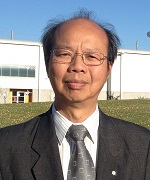
Prof. John Mo
(Fellow of IME and IEA)
Royal Melbourne Institute of Technology, Australia
John P. T. Mo is Professor of
Manufacturing Engineering since 2006. He was Head of Manufacturing
and Materials Engineering at RMIT University, Australia between 2006
and 2014. During his headship, his department has over 40 staff and
research fellows with over 500 students from undergraduate to PhD
levels. John has been an active researcher in manufacturing and
complex systems for over 40 years and worked for educational and
scientific institutions in Australia and Hong Kong. From 1996, John
was a Project Manager and Research Team Leader with Australia's
Commonwealth Scientific and Industrial Research Organisation (CSIRO)
for 11 years leading a team of 15 research scientists working on
high value industrial projects. A few highlights of the projects
that John led in CSIRO and in RMIT included: signal diagnostics for
plasma cutting machines, ANZAC ship alliance engineering analysis,
optimisation of titanium machining for aerospace industry, critical
infrastructure protection modelling and analysis, polycrystalline
diamond cutting tools on multi-axes CNC machine, system analysis
for support of complex engineering systems, national Electronic
Product Code demonstrator (for Australia). John has been academic
advisor for several educational institutions in the Australasian
region on their engineering program development and operations. John
obtained his doctorate from Loughborough University, UK and is a
Fellow of Institution of Mechanical Engineers (UK) and Institution
of Engineers Australia.
Speech Title: Sustainable Cutting of Hard-to-Cut Materials
Abstract: Hard-to-cut materials are metallic
materials such as titanium alloys, tungsten carbide,
polycrystalline diamond, cubic boron nitride, with properties of
high hardness, high strength, thermal adhesion, chemically reactive.
These properties render traditional subtractive manufacturing
methods such as cutting, milling, grinding difficult to process. A
non-traditional machining method "electric discharge machining"
has been commonly used for shaping core of moulds and dies, and is
restricted on three-axes machining centres. Unfortunately,
traditional CNC machining often removes 95% of the raw materials,
which not only causes significant material wastage, but also wastes
lots of machining power (energy). Furthermore, starting with the
developing of an electric discharge grinding machine, research
into the fundamental scientific principles has generated a series of
electric discharge control theories which are then applied to
other forms of manufacturing platforms. One of the platforms is to
mount the electric discharge tool to robots. This paper reviews the
scientific principles and development pathways of a new electric
discharge cutting tool on robots. Compared to CNC machine tools,
multi-axes robots suffer from significant vibration and instability
if they are required to do machining of metals, due to high forces
during cutting and their relatively weak structure. Research has
shown that while CNC machines often have stiffness greater than 50
N/μm, robots usually have less than 1 N/μm. On the other
hand, due to the IRs' high degrees of freedom, they can perform
machining trajectories in ample 3-dimensional space while keeping an
arbitrary position and orientation for any cutting tool.
Combining the best characteristics of electric discharge cutting
and versatile robot arm trajectories, the new electric discharge
cutting tool is capable of preserving raw materials offcuts for
other uses. This development sparks a new line of research into
integrating electric discharge machining process with robots'
spatial flexibility while the system does not create any contacting
forces hence producing accurately machined parts more sustainably.